The Idea in One Sentence
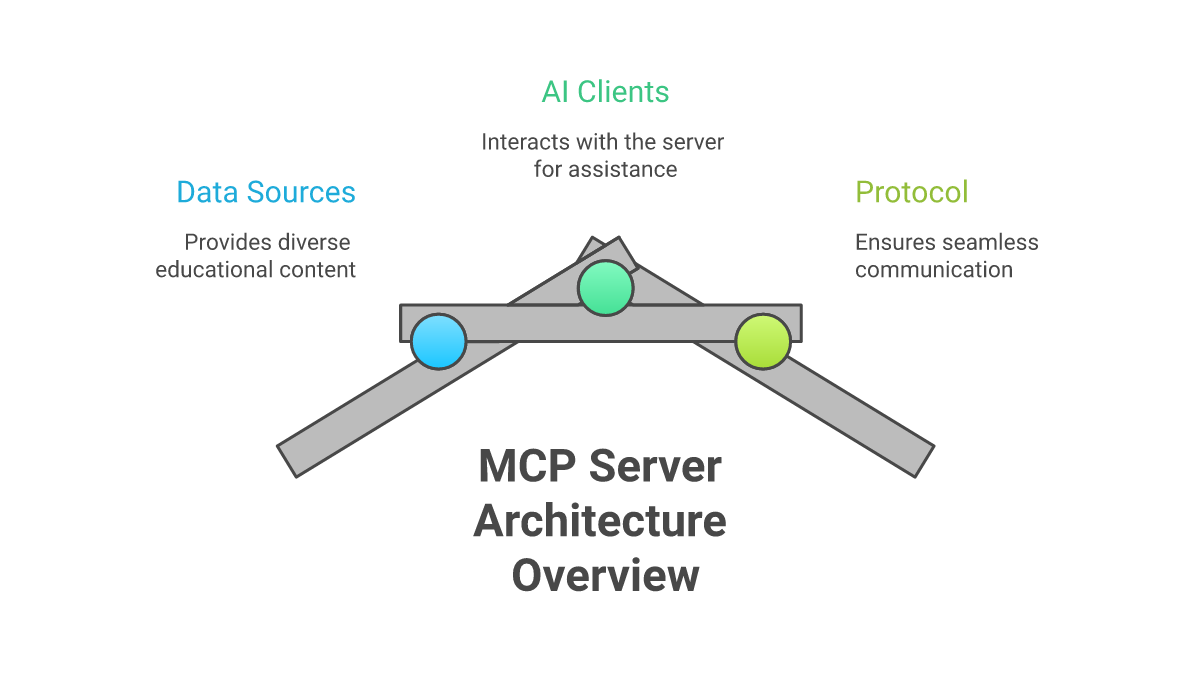
If you have used an AI assistant recently, you have probably run into its blind spot: it knows a great deal in general, but it does not know your particular tools, your datasets, or the specific body of knowledge you work with. The Model Context Protocol, usually shortened to MCP, is a shared standard that closes that gap. In plain terms, it is a standard way to let an AI assistant look things up in a specific library. A useful mental picture is a USB port for AI: plug in a connection, and the assistant can reach a particular set of information and answer from it.
We have built one of these connections for ImpactMojo. With it in place, an AI assistant no longer has to guess about a behaviour change technique or paraphrase a half-remembered course description. It can look the answer up in our actual material and hand it back with the real details.
What You Can Now Ask
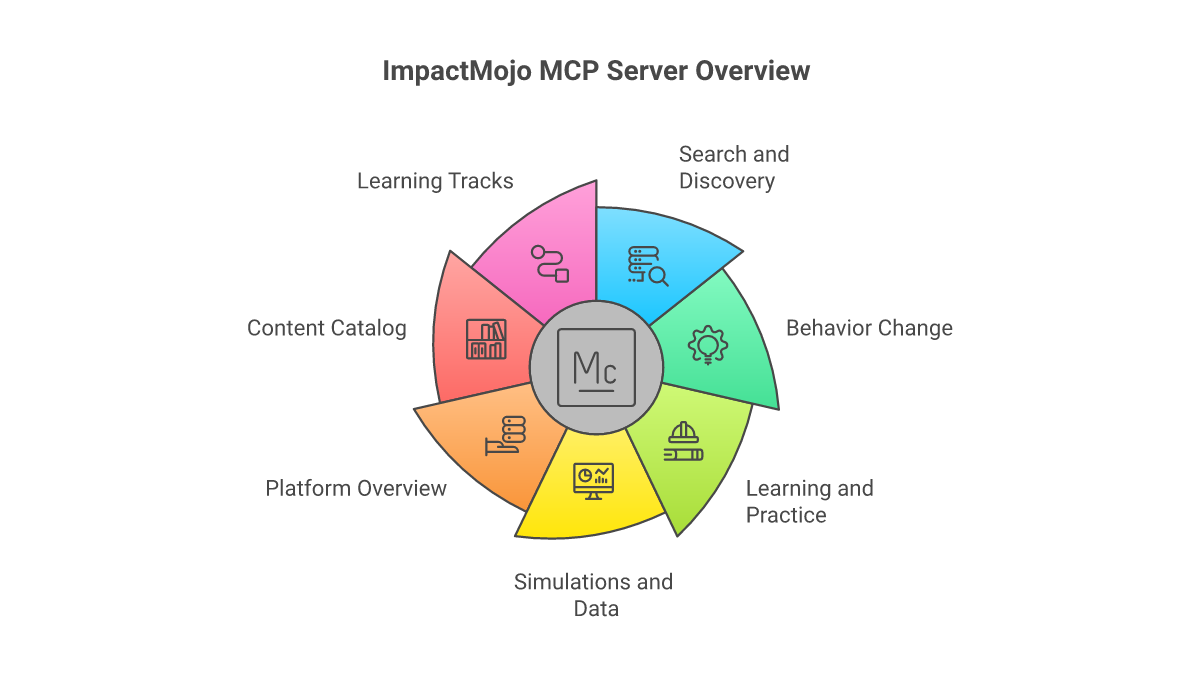
Once the connection is in place, an AI assistant can reach into most of what ImpactMojo holds and answer precisely. That includes:
- Our full library of more than 700 items — courses, games, labs and handouts — searchable by topic.
- All 203 behaviour change techniques, each with South Asian context and case studies, so the assistant can pull up the right one for a given problem.
- The Dataverse: our catalogue of hundreds of tools, datasets and data sources, browsable by theme such as climate adaptation or poverty mapping.
- Practice challenges and their full case material, filtered by learning track and difficulty.
- Our economics simulation games and the questions each one is designed to explore.
- India's greenhouse-gas emissions data, drawn from the Climate TRACE project.
Put simply, the assistant stops answering from memory and starts answering from the library.
Questions you could ask
- "Find ImpactMojo courses about randomised controlled trials."
- "Look up behaviour change technique 4.1 and show me South Asian case studies."
- "Which tools in the Dataverse are relevant to climate adaptation?"
- "List practice challenges for the MEAL track at intermediate difficulty."
- "Show me India's greenhouse-gas emissions data from Climate TRACE."
- "Which economics simulation games cover market failures?"
Why This Matters
No practitioner should have to hold 700-odd resources in their head, or remember which of 203 behaviour change techniques speaks to social support, or which dataset maps poverty from satellite imagery. The point of connecting the library to an AI assistant is that the right course, technique or dataset can surface at the moment it is actually needed.
This is the direction we think development education is heading: not a platform you have to remember to visit and navigate on its own, but knowledge that meets practitioners inside the tools they are already using.
"The best educational platform is the one that shows up with the right resource at the right moment. This connection is a step toward that."
How to Try It
If you use an AI assistant that supports these connections — Claude is one — you can add ImpactMojo in about a minute. The connection runs on your own computer, makes no outside calls, and needs no account or key. Step-by-step instructions live in our open-source project on GitHub, which is free for anyone to use or build on.
What's Next
This is an early version. We plan to connect more of the library over time — including our reading companions and dojo practice sessions — and to work with more AI assistants than the ones supported today. The knowledge base keeps growing, and this connection will grow with it.
It is open source and free to reuse, and we would genuinely like to hear from anyone who builds something interesting with it. And if you are thinking more broadly about what AI tools mean for evaluation practice, our free course AI for Impact covers exactly that ground.