Every year, thousands of dedicated professionals join the development sector across South Asia. They come with passion, commitment, and a genuine desire to create change. But many quickly discover an uncomfortable truth: the skills they need to be effective—monitoring and evaluation, research design, data analysis, theory of change—are locked behind expensive training programmes, academic institutions, or exclusive consulting networks.
This is the gap ImpactMojo was created to fill.
The Problem We See Every Day
Consider the typical journey of an M&E officer at a small or mid-sized NGO in India, Bangladesh, or Nepal. They're often bright, motivated individuals who've been handed responsibility for measuring their organisation's impact without adequate training in how to actually do it.
Their options? Expensive workshops that cost more than a month's salary. Academic courses that require years of commitment. Or the dangerous alternative: learning on the job through trial and error, potentially making fundamental mistakes that undermine years of programmatic work.
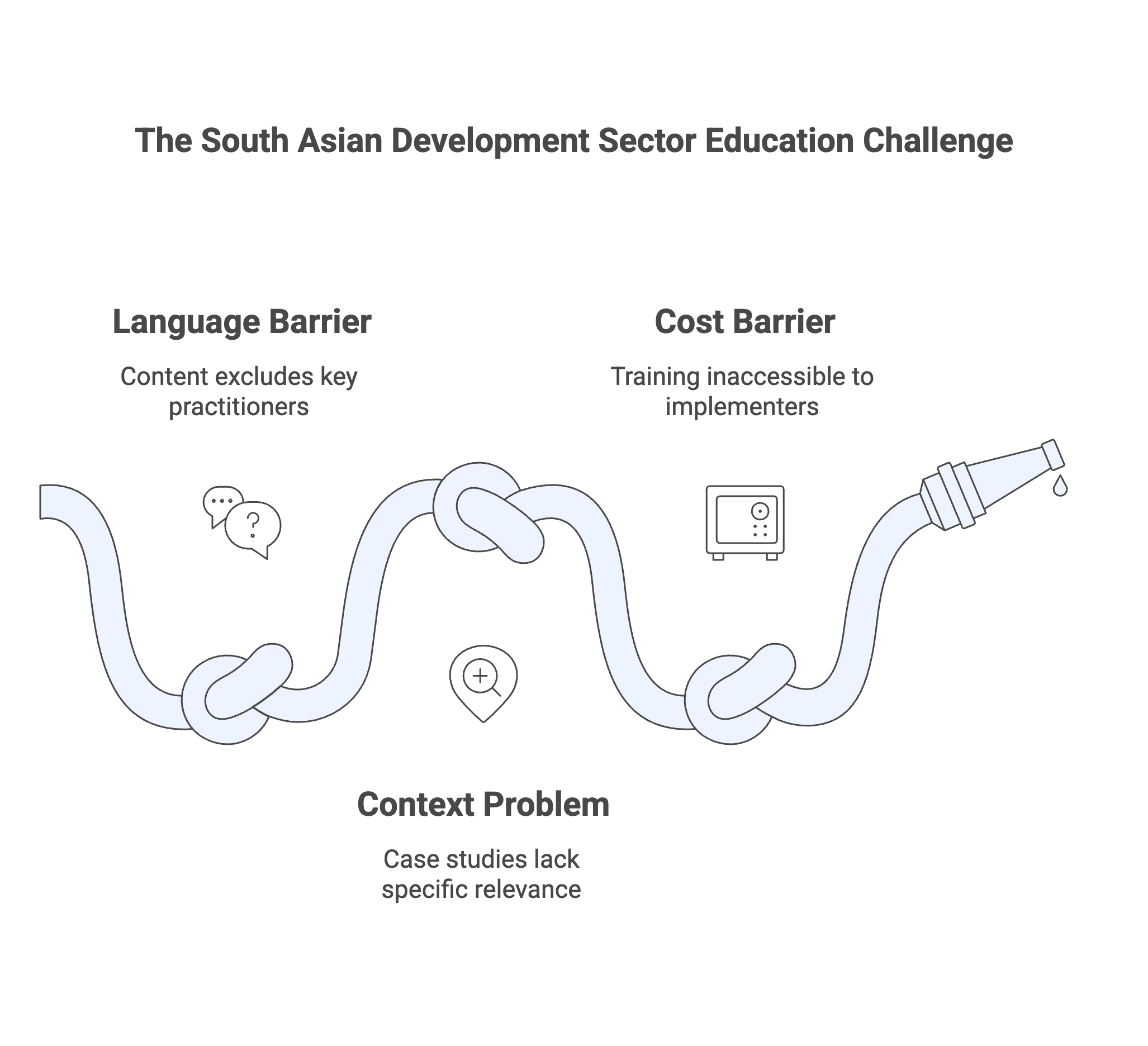
The result is a sector-wide capacity deficit. Logframes that don't actually track meaningful change. Theories of change that exist only as proposal requirements. Evaluations that tell funders what they want to hear rather than what programmes need to improve.
"We don't lack people who care about impact. We lack accessible pathways for them to build the skills to measure and create it."
What Makes South Asia Different
The development sector in South Asia operates under unique constraints that global training providers often overlook.
First, there's the language barrier. While English remains the lingua franca of international development, the vast majority of practitioners—especially those working directly with communities—are more comfortable in Hindi, Bengali, Tamil, Telugu, Marathi, or other regional languages. Content that exists only in English excludes exactly the people who need it most.
Second, there's the context problem. Case studies from rural Kenya or urban Brazil may illustrate general principles, but they don't help a practitioner navigate the specific challenges of working with gram panchayats, understanding NITI Aayog guidelines, or designing surveys appropriate for joint family structures.
Third, there's the cost barrier. A training programme priced for international consultants is simply inaccessible to someone earning ₹30,000 a month. And yet these are precisely the people doing the day-to-day work of implementation and monitoring.
Our Vision: Quality Without Barriers
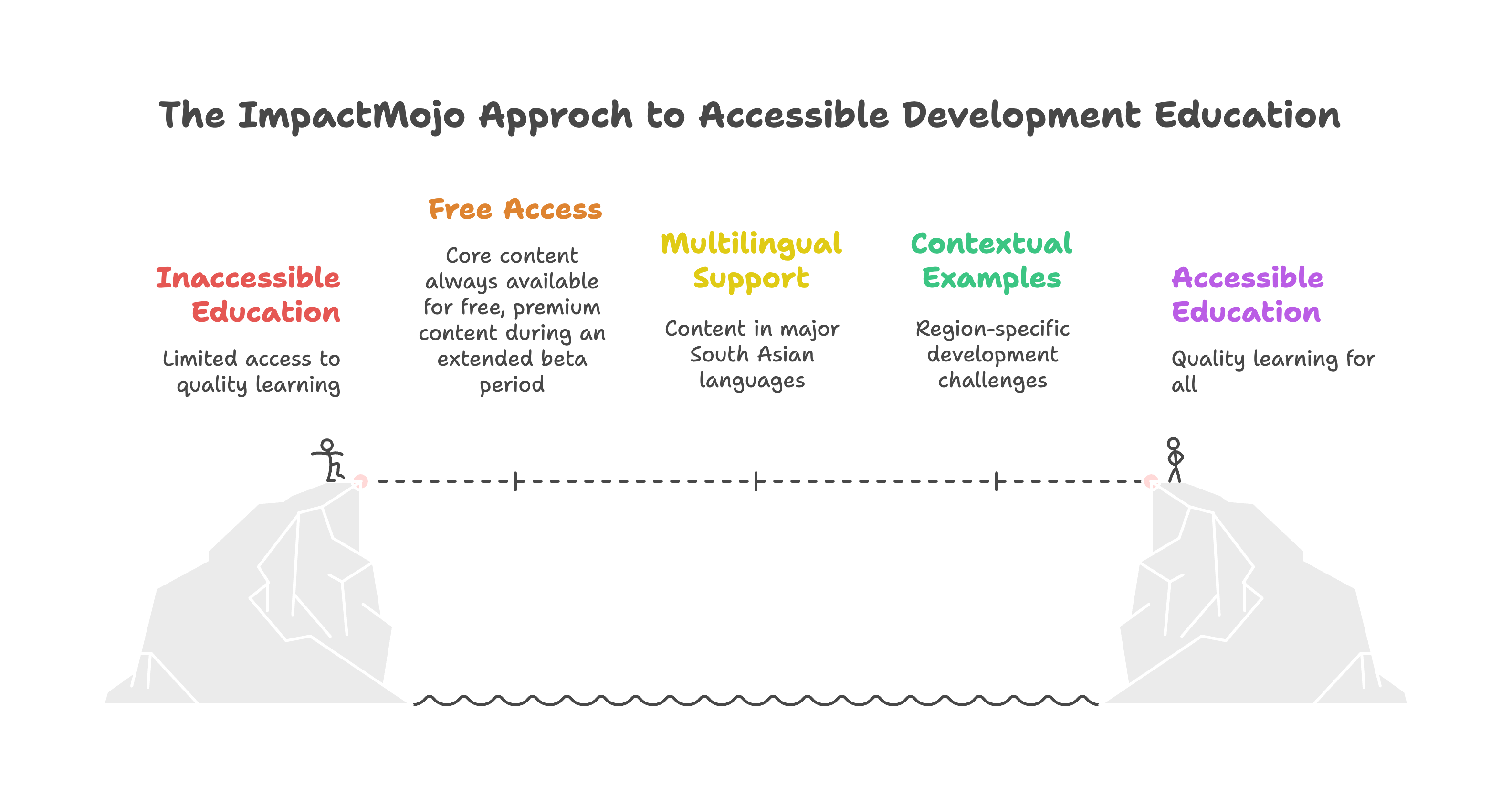
ImpactMojo was built on a simple premise: that quality development sector education should be accessible to anyone willing to learn, regardless of their organisation's budget, their geographic location, or the language they're most comfortable in.
What This Means in Practice
- Free access to core learning content
- Multilingual support across major South Asian languages
- Context-specific examples drawn from the region's development challenges
- Interactive labs that build real skills, not just theoretical knowledge
- Mobile-first design for practitioners who access content on phones
Beyond Courses: Building a Community
Education alone isn't enough. Practitioners also need connection—to peers facing similar challenges, to mentors who've navigated the path before them, to a community that reinforces learning and provides ongoing support.
That's why ImpactMojo is more than a course platform. We're building spaces for practitioners to share experiences, ask questions, and learn from each other. Because the M&E officer in Odisha struggling with attribution challenges may have more to learn from their counterpart in Bangladesh than from any textbook.
What We're Building
Our current offerings include comprehensive courses in MEAL fundamentals, Theory of Change, research methods, and development economics. But we're just getting started.
The platform will continue to grow with new interactive labs, premium tools for advanced practitioners, coaching services for organisations ready to invest in their teams, and partnerships that extend our reach across the region.
Join Us
If you're a practitioner looking to build your skills, a organisation seeking to strengthen your team, or simply someone who believes that capacity building should be accessible to all—we invite you to explore what we're creating, starting with the free course catalog.
This is the beginning of something we believe can genuinely transform how the development sector builds its human capital. And we're glad you're here.