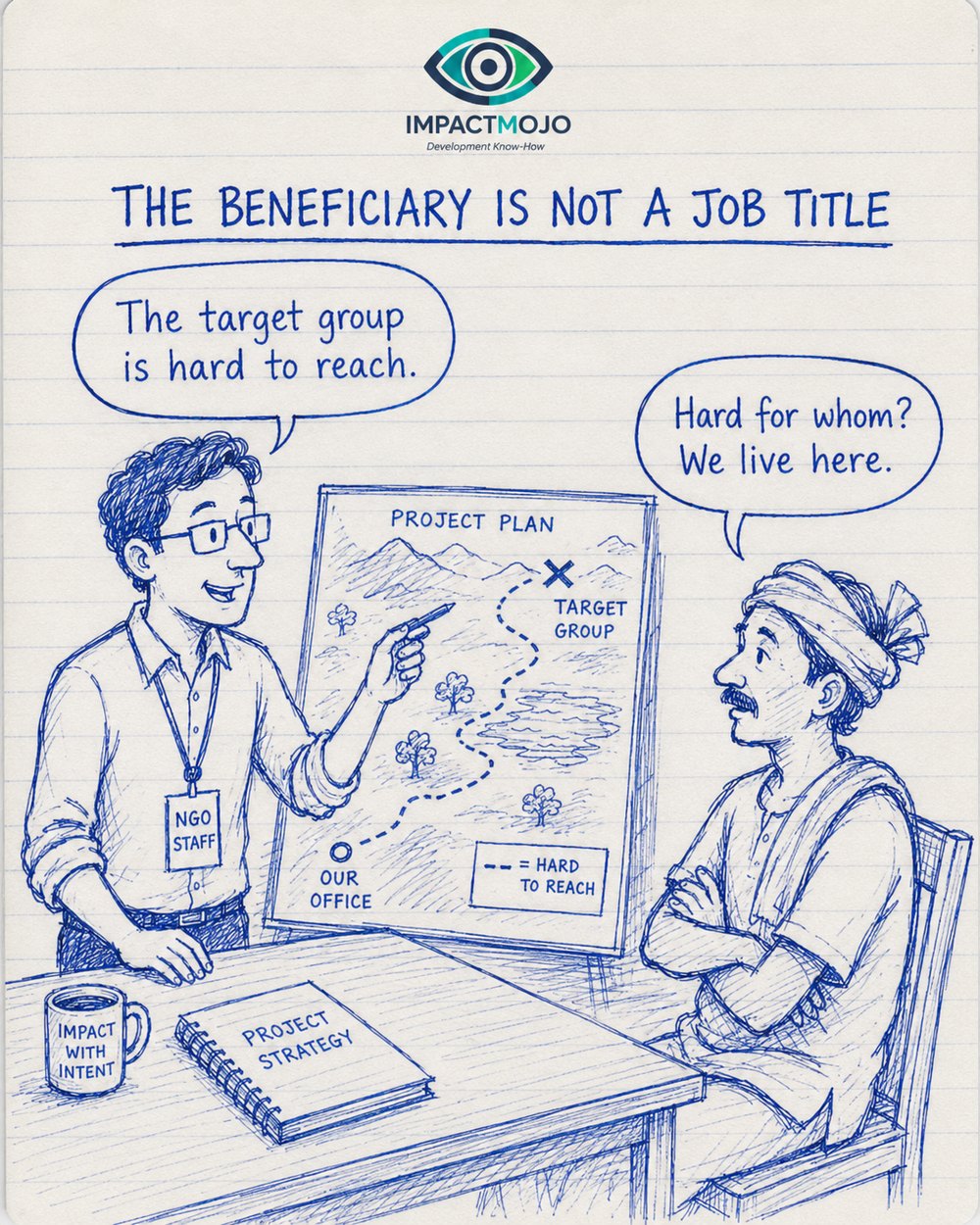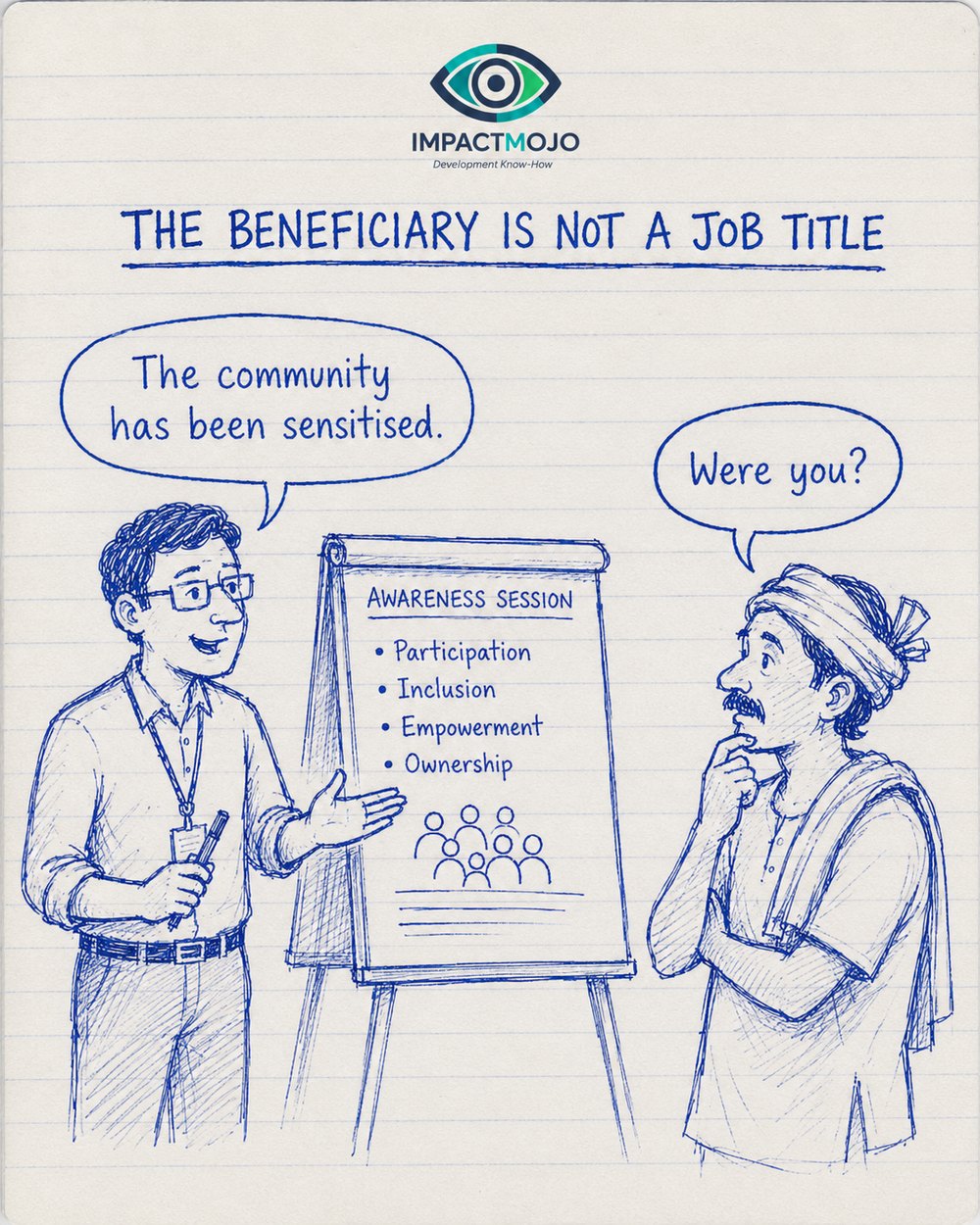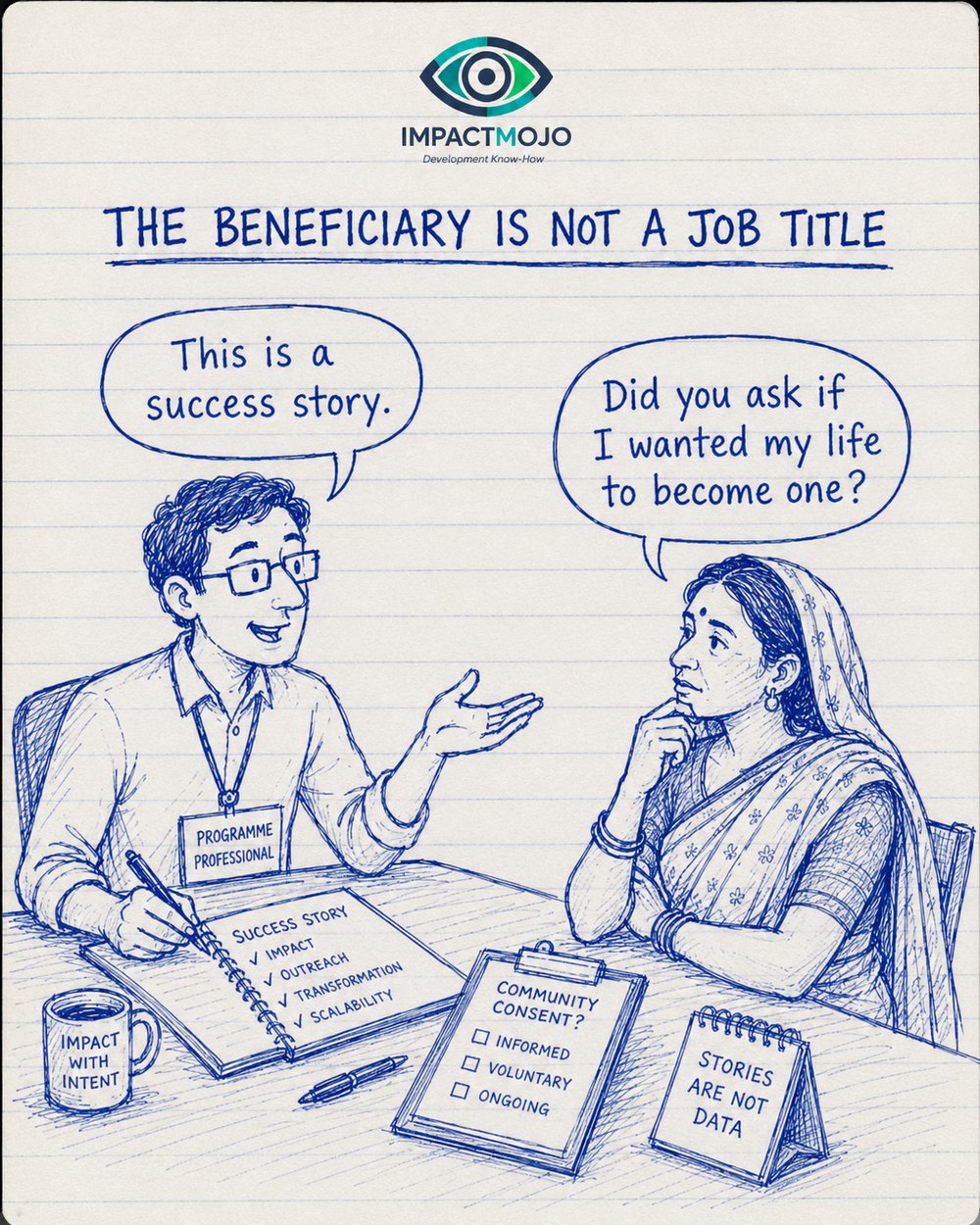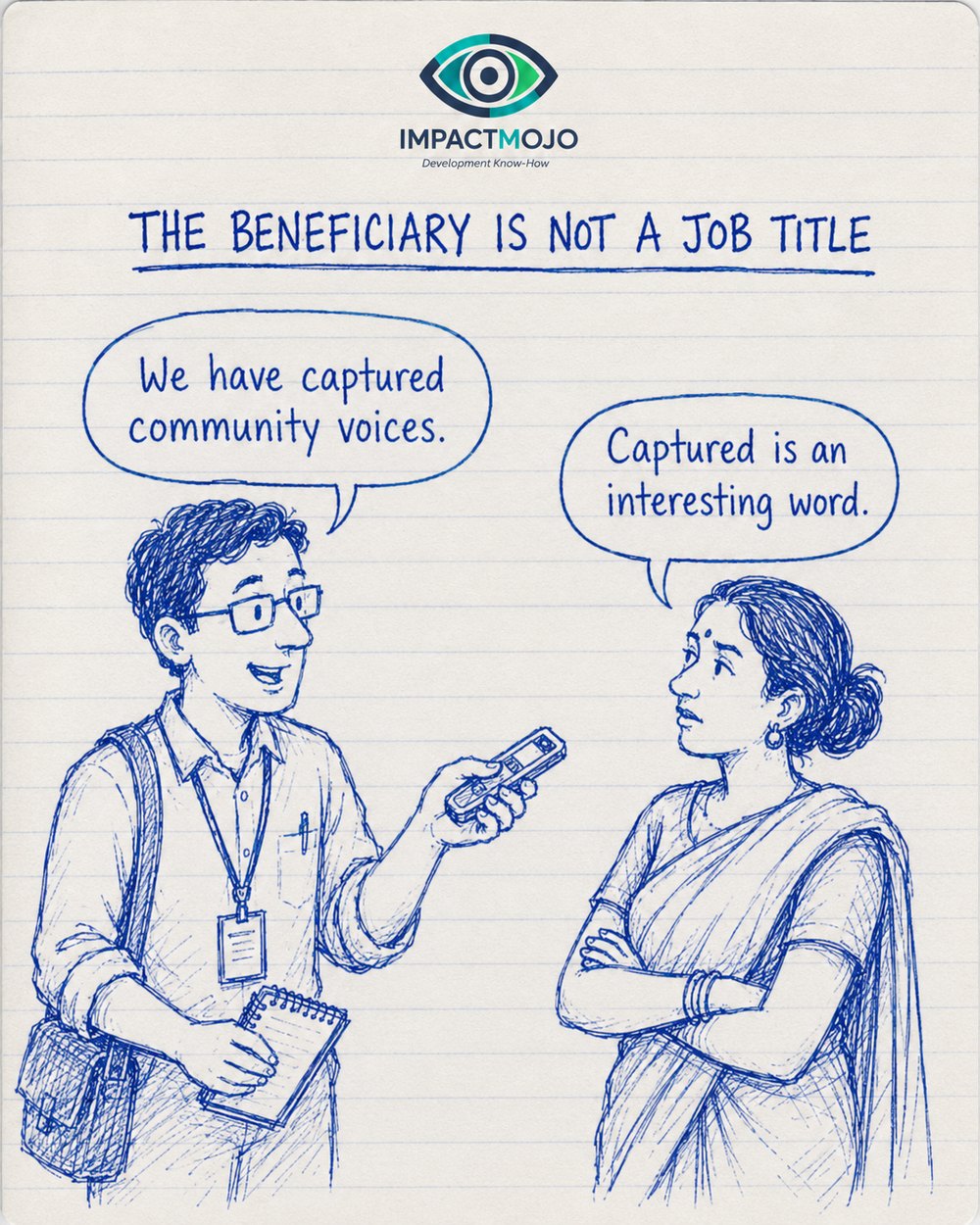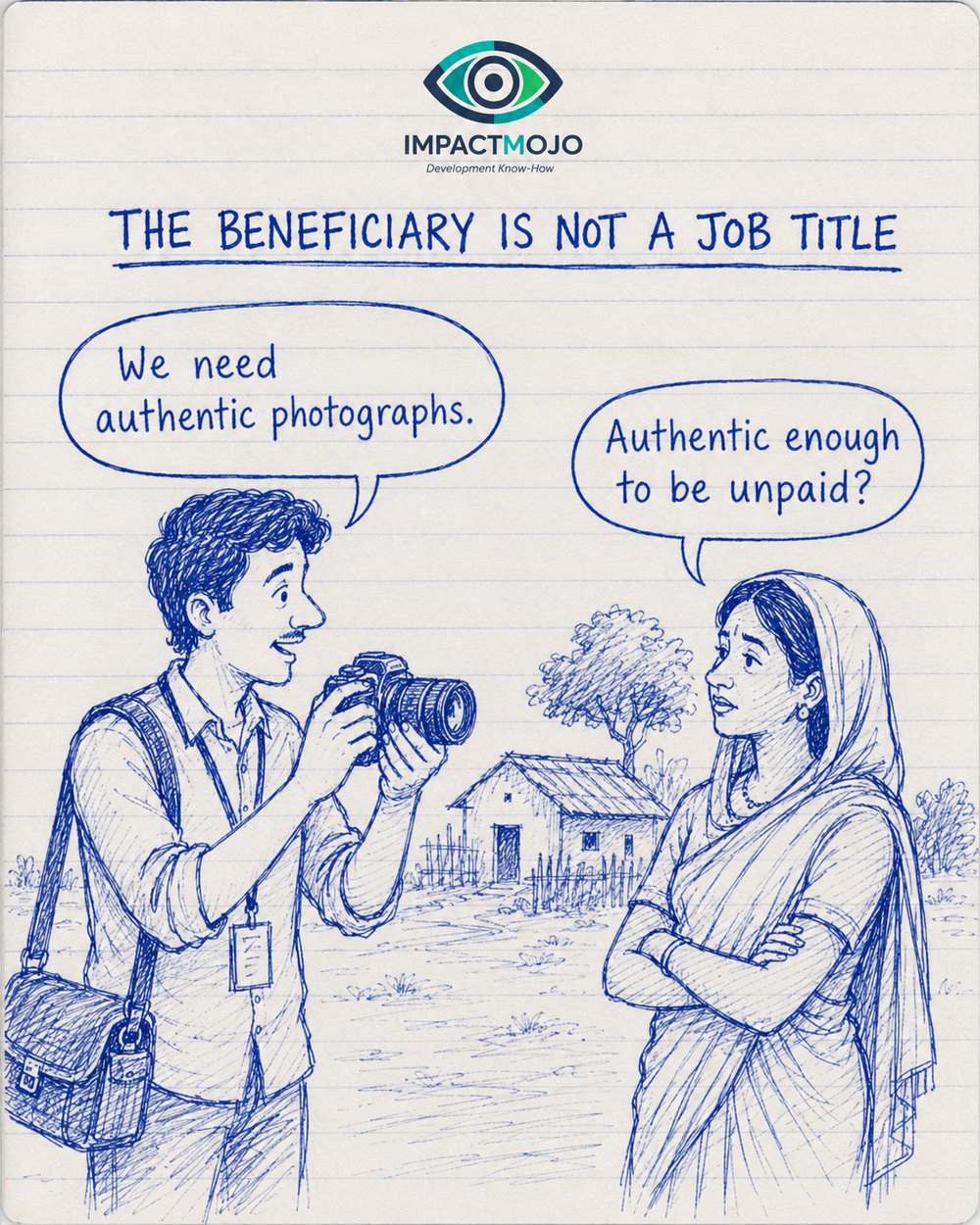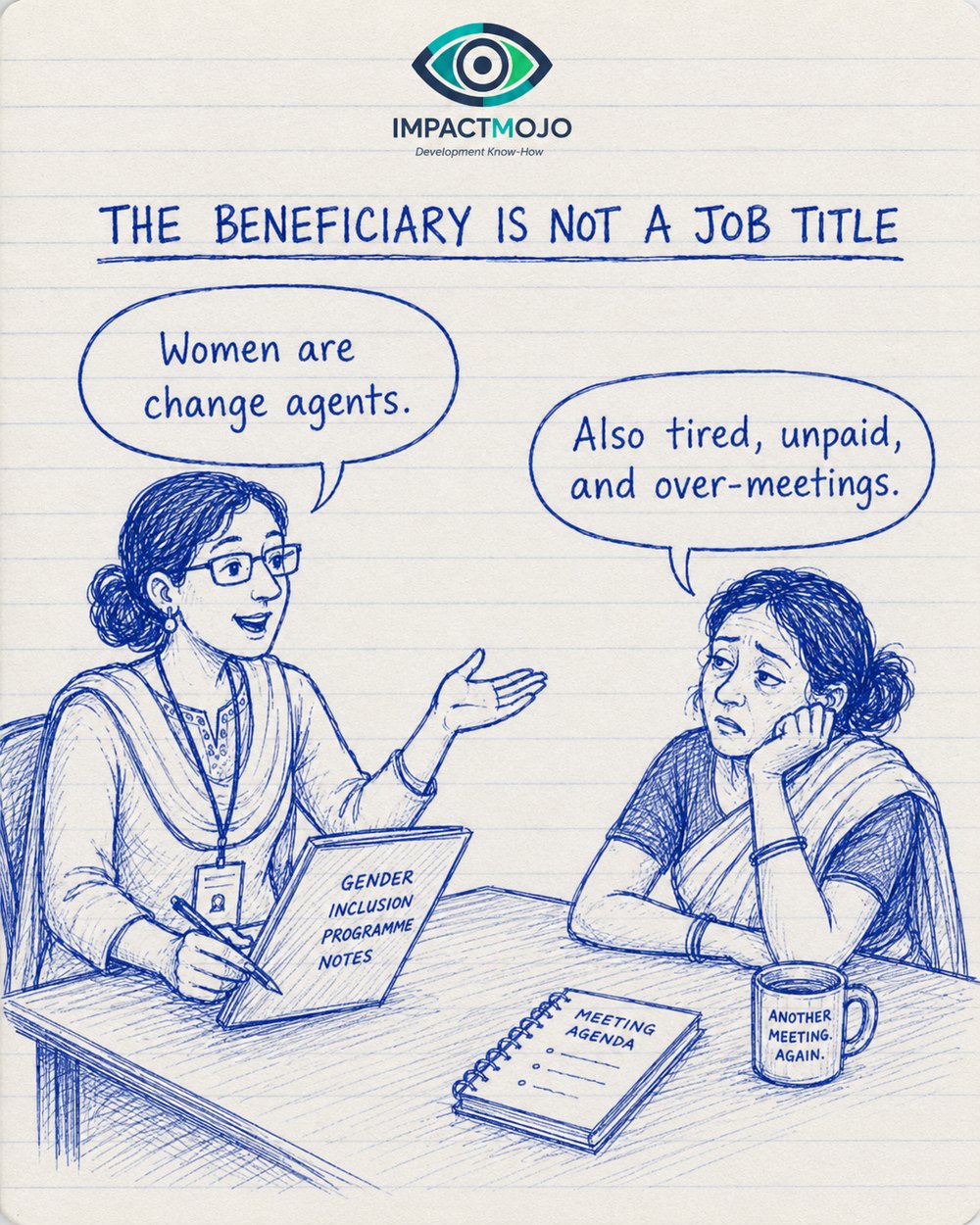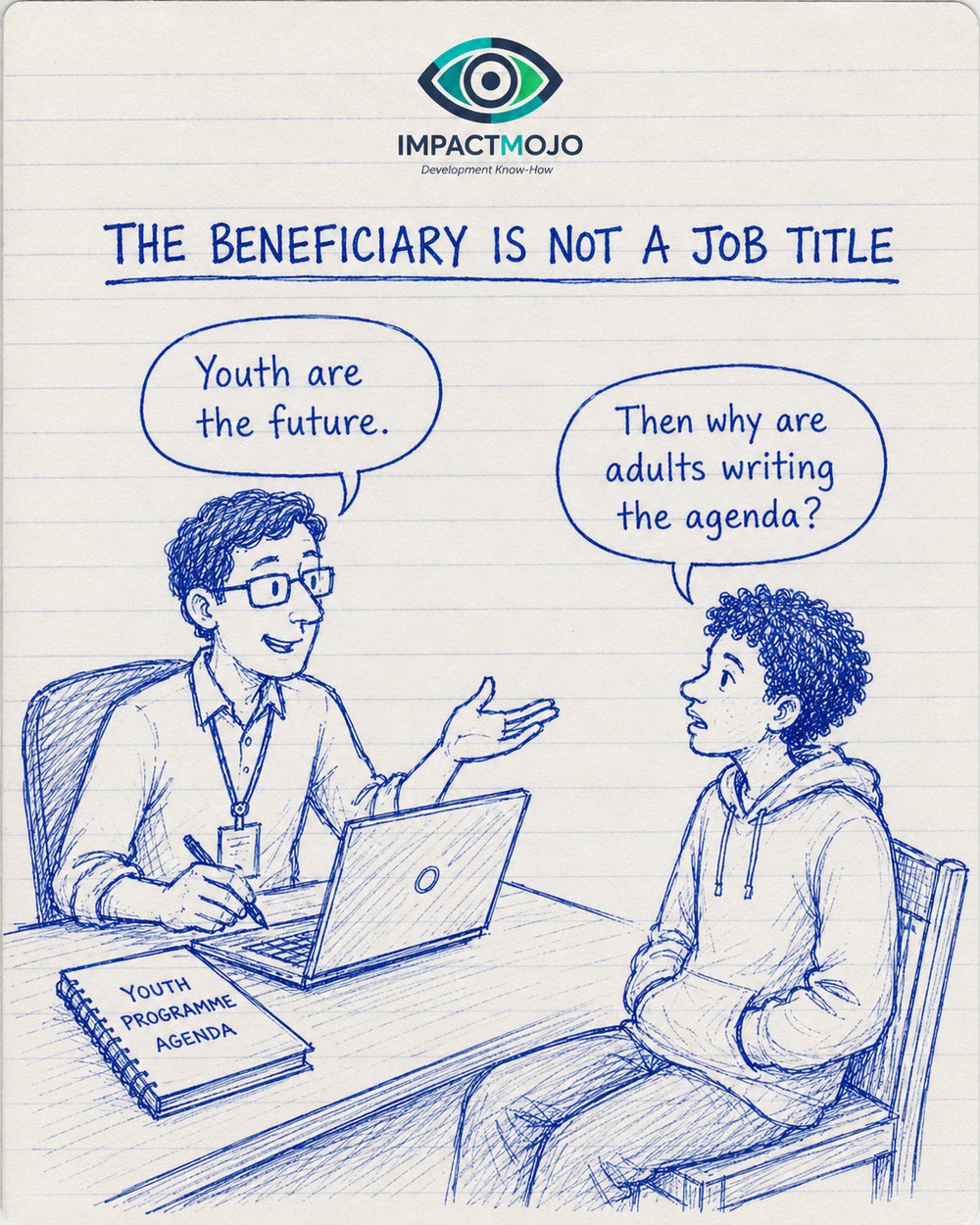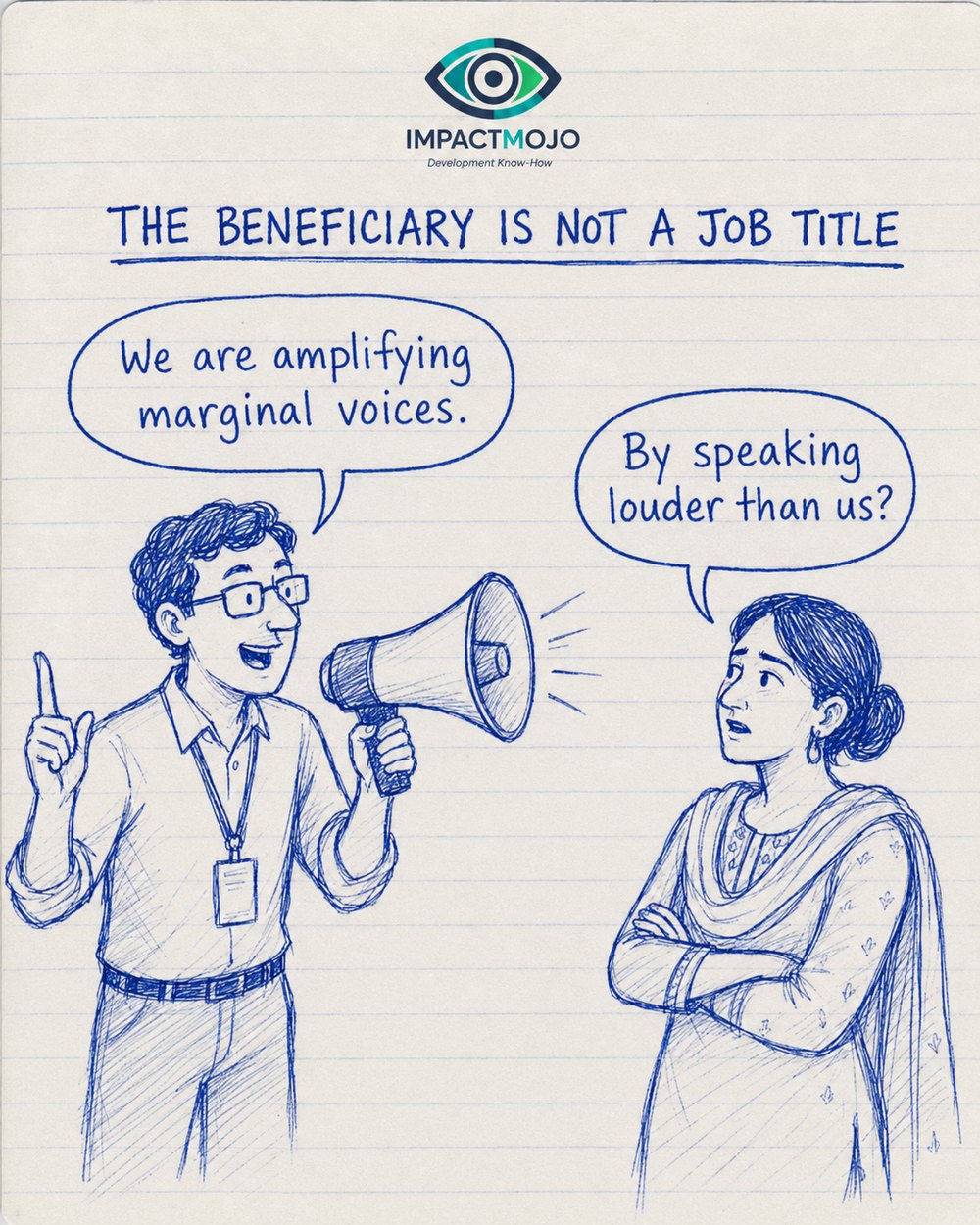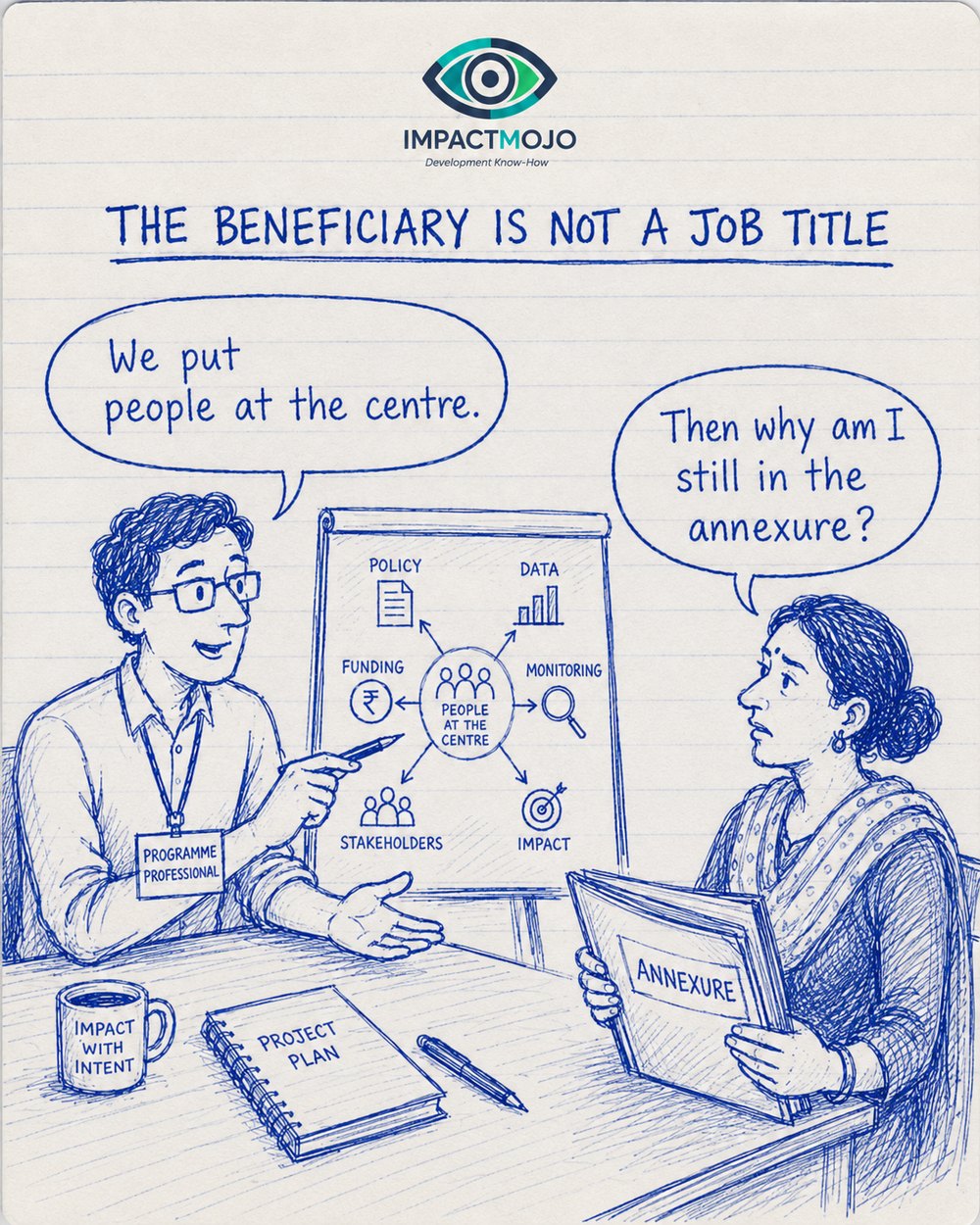
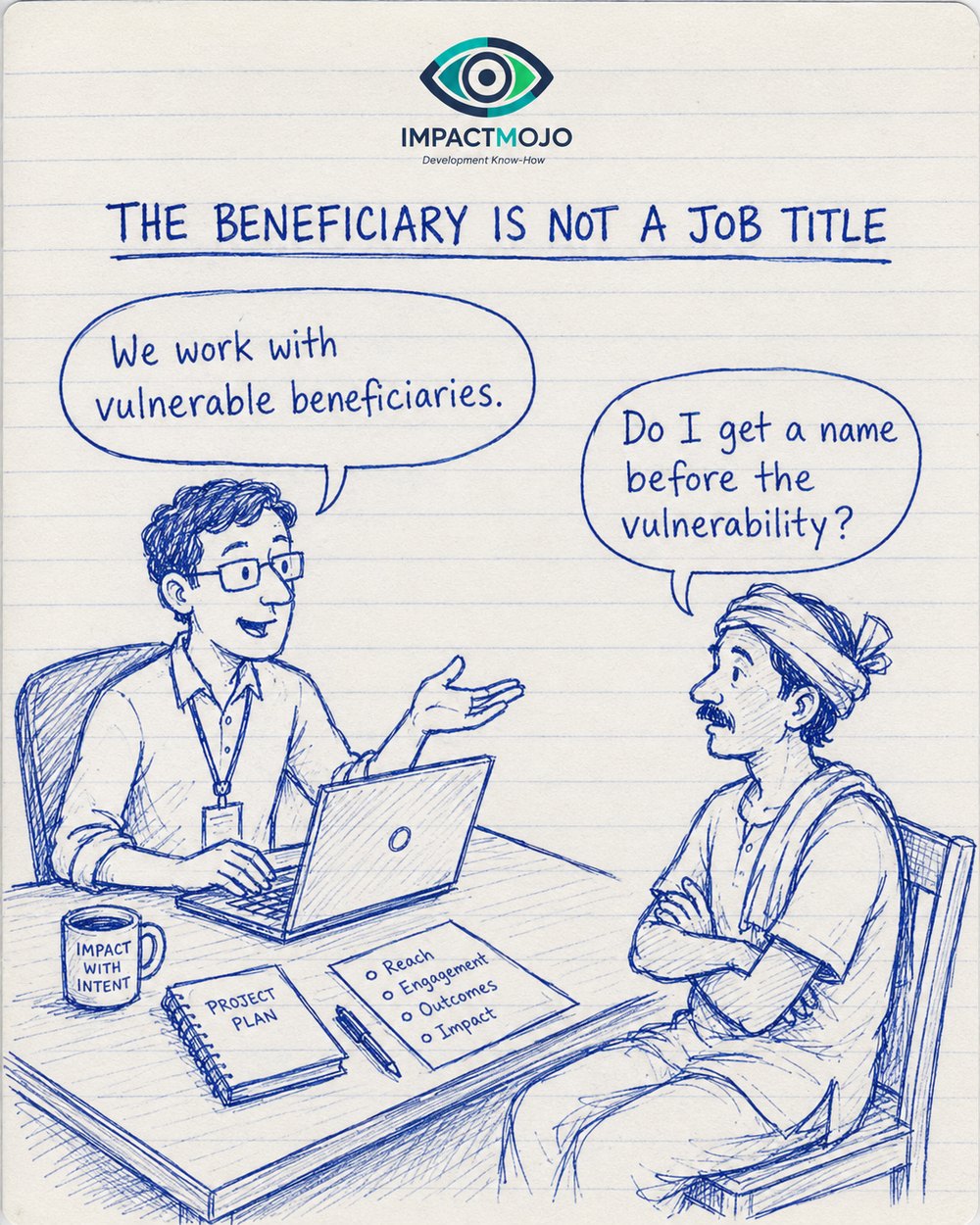
The label arrives before the person
“Beneficiary” and “vulnerable” are working words — they sort people into a budget line and a target group. But the sorting is rarely neutral. Andrea Cornwall and Karen Brock note that development’s favourite words carry quiet assumptions about who acts and who is acted upon; the vocabulary frames people even as it claims only to describe them.1
Robert Chambers has spent decades on the asymmetry between the “uppers” who name and the “lowers” who are named: the professional’s categories travel from the centre outward and stick, while the person’s own account of their life rarely makes the return journey.2 A word like “vulnerable” can be accurate and still erase — it leads with what someone lacks and files the rest, including their name, under “context”.
The reply is not refusing help. It asks for the order to be reversed: person first, condition second. That is the whole difference between a case and a colleague.