
Marginalia
Cartoon essays on development work: the sector’s claim, the field’s reply, and a footnote to back it up. Five essays, fifty drawings, and counting.
Every cartoon runs the same setup. Someone official says the polished thing the development sector likes to say, and someone who does the real work (a field officer, an ASHA, a farmer, a beneficiary) says what usually goes unsaid. The jokes are drawn; every footnote is real.
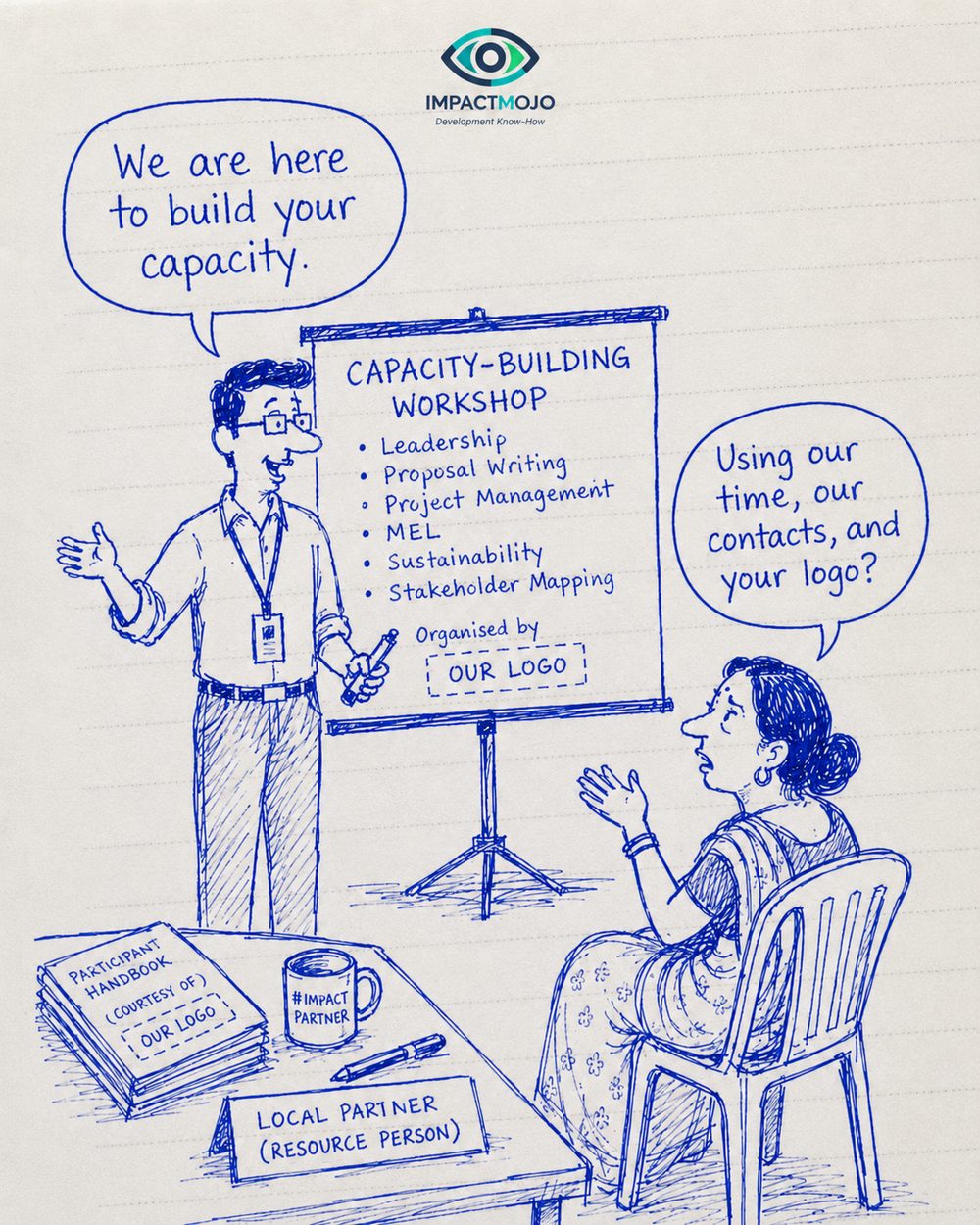
Capacity for Irony
The language of help meets the people it claims to help. Capacity-building, scale, pilots, logframes, “mainstreamed” gender, and the last mile, each cliché answered by the frontline worker who already knew better.
Read the essay →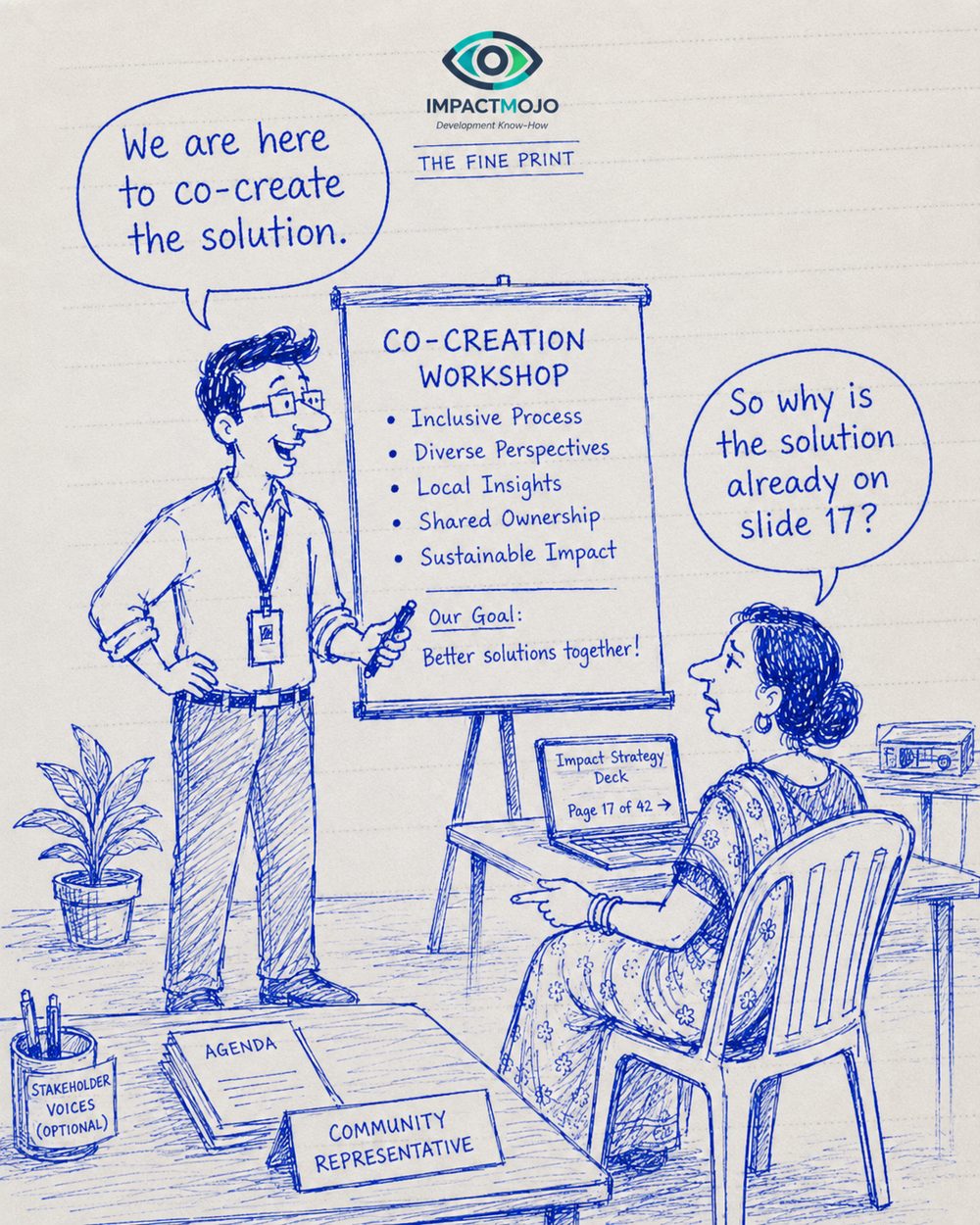
The Fine Print
Every promise has a clause the slide leaves out: inclusion with stairs, ownership without the budget, evidence that never reaches the allocation, resilience without reducing the shock. The headline, and the small type underneath.
Read the essay →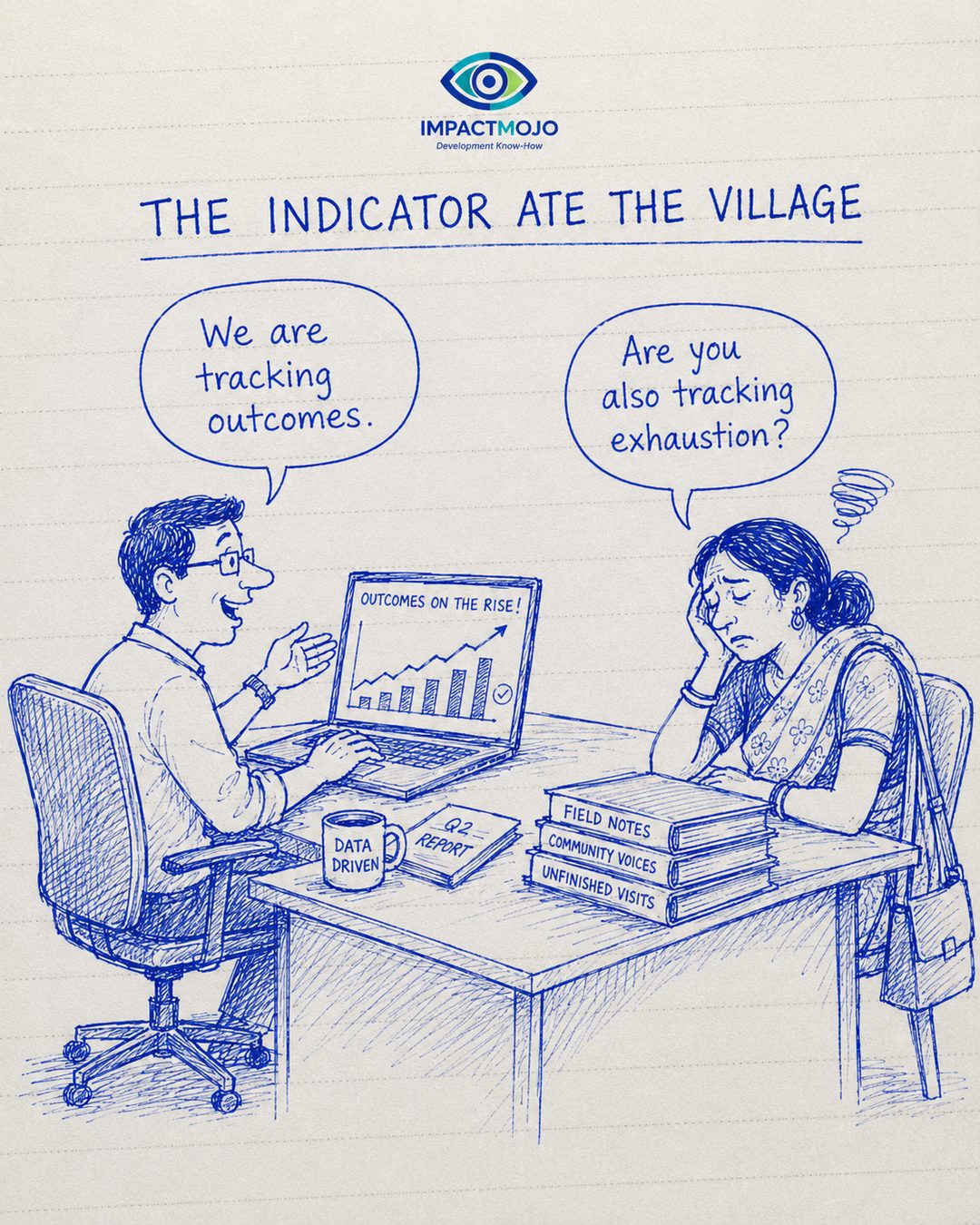
The Indicator Ate the Village
Monitoring & evaluation meets the people it measures: the baseline that learns nothing, the dashboard at 87% beside an empty clinic, real-time data for whom, the endline that never saw the year after exit, and accountability that only points up.
Read the essay →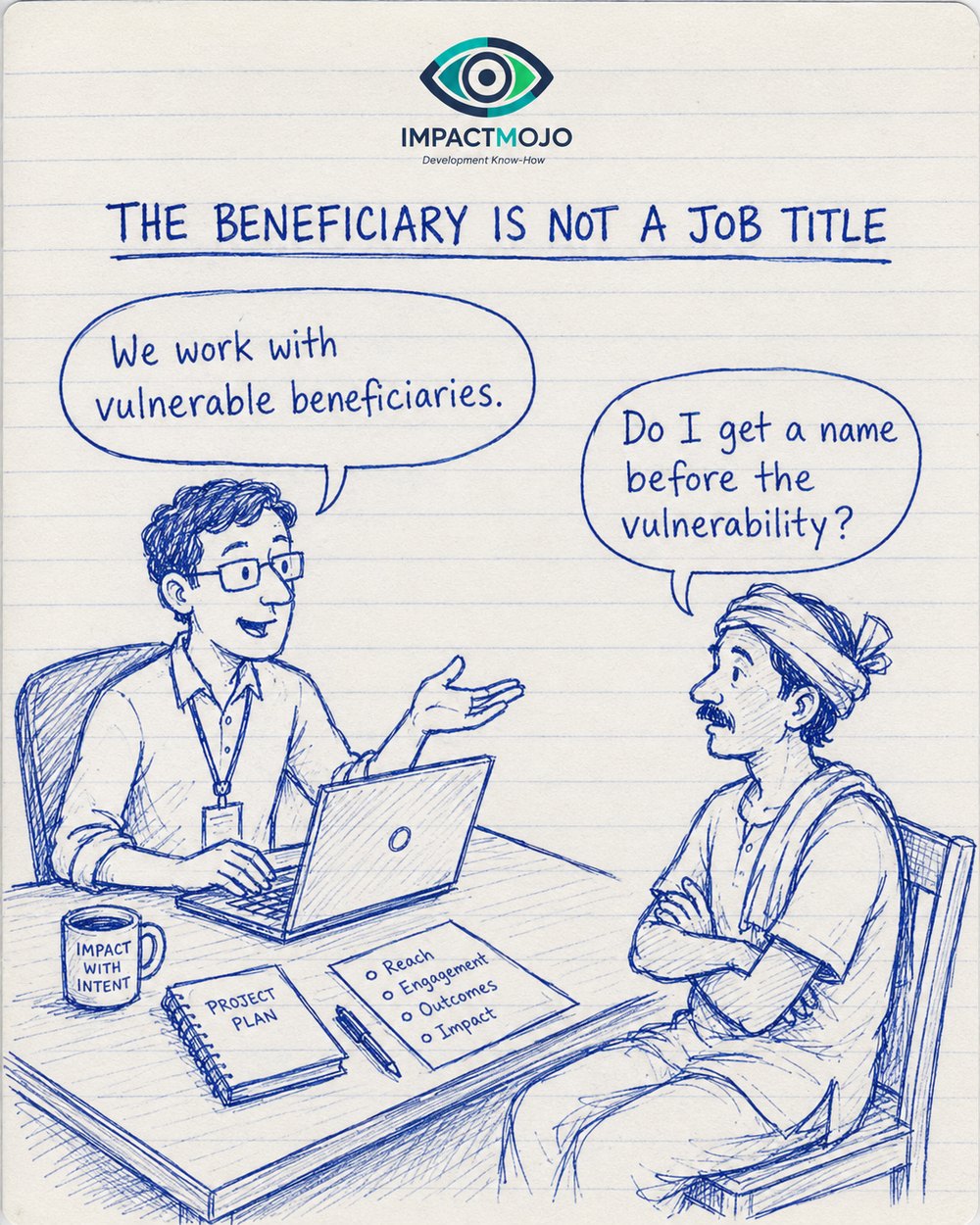
The Beneficiary Is Not a Job Title
The sector’s vocabulary meets the people it files under it: sensitised, hard-to-reach, vulnerable, captured, amplified, people-centred. Each label is answered by the person wearing it, and footnoted with the evidence behind the reply.
Read the essay →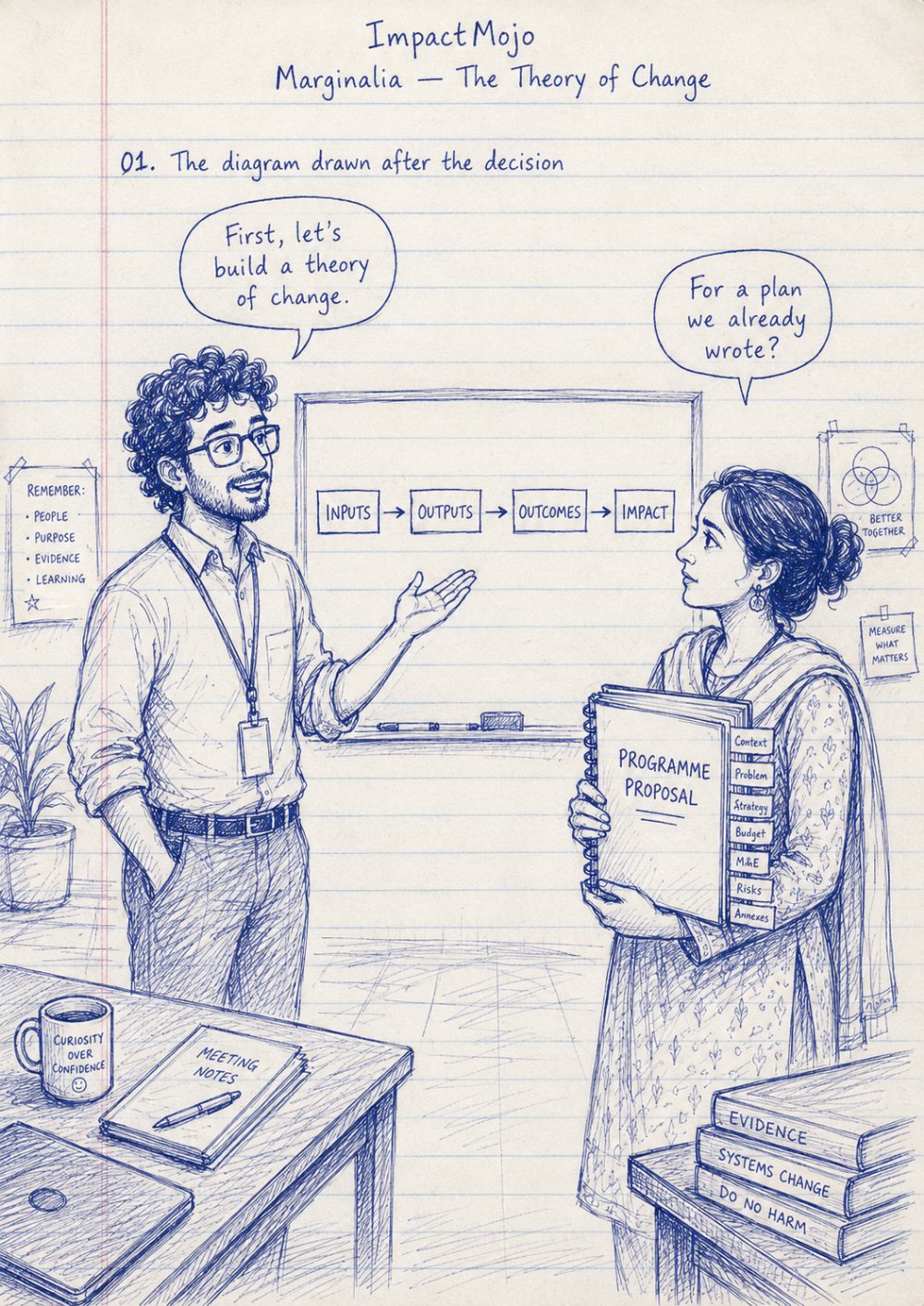
The Theory of Change
The logic-model industry meets the district it diagrams: the theory of change drawn after the plan, the logframe that can’t be reopened, the assumptions in six-point font, systems change in a two-year grant. Each planning-tool cliché answered by the field, and footnoted with the evidence.
Read the essay →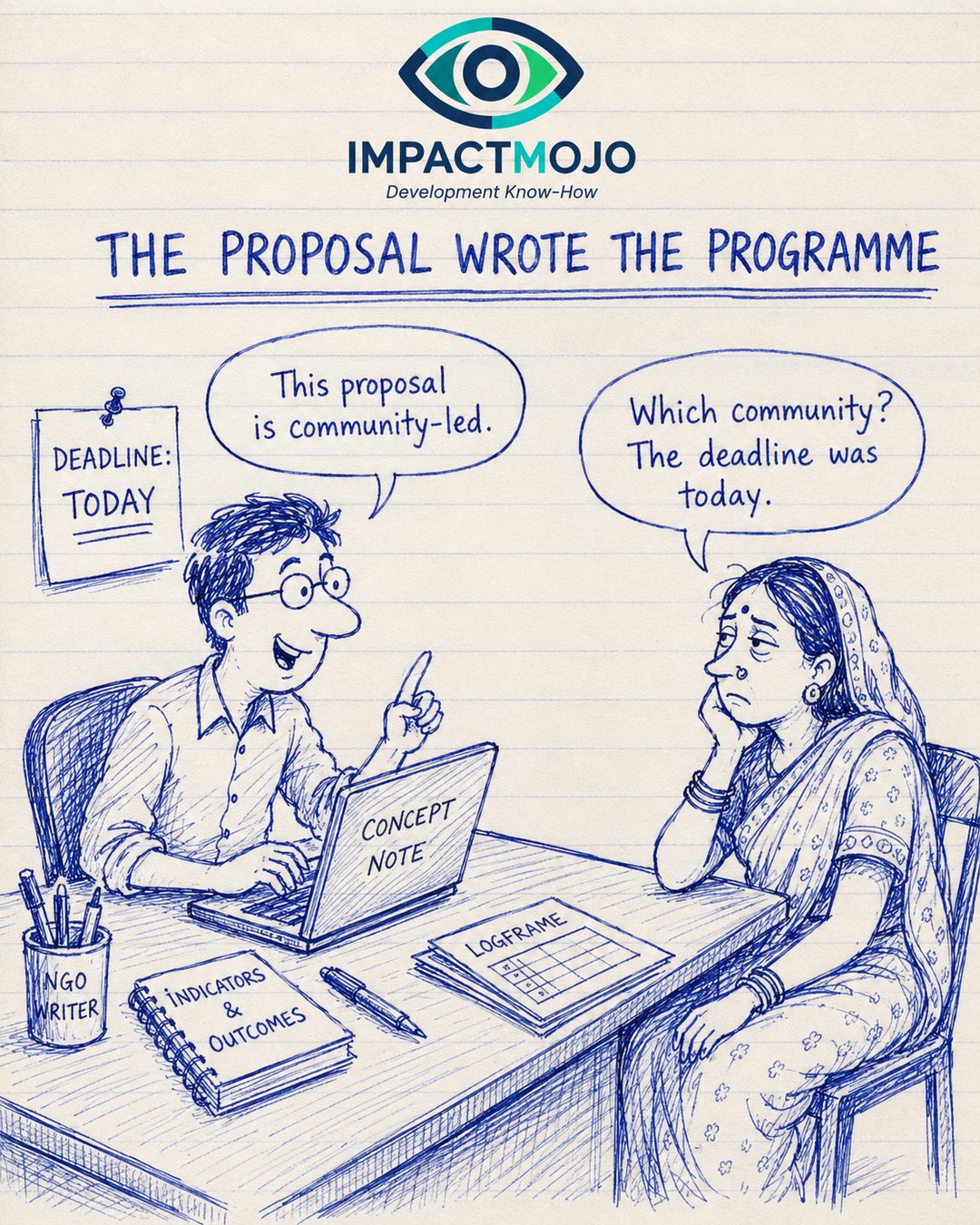
The Proposal Wrote the Programme
The gap between the proposal and the programme: community-led on paper, demand-driven until the donor’s priorities arrive, the innovation angle nobody asked for, the consortium that meets more than it delivers, and the sustainability plan written to be filed, not followed.
Read the essay →More on the way
Marginalia grows a few cartoons at a time. Each essay collects ten drawings around a theme and pairs every one with two or three cited, evidence-based paragraphs, so the punchline lands and then holds up under a footnote.